
CGMs Add Value in Reversal of T2D but are not Indispensable!
Diabetes is a very common condition known to humans for generations. It can turn into serious complications and medical conditions involving various organs. There are two main types of diabetes. In type 1 diabetes, our body can’t make any insulin at all, but type2 diabetes is a life-long, chronic disease in which the body either does not produce enough insulin or the cells in our body don’t respond to insulin correctly. Despite its huge impact on the global population, there is still no cure for Type2 diabetes (T2D). The only known cure for Type 1 diabetes (T1D) is by either a pancreas transplant or a transplant of the specialized pancreatic cells that produce insulin. Recent research suggests that it is possible to reverse the T2D to a point where one may not need medication to manage it and our body does not suffer ill effects from hyper or Hypo- glycemia’s. Reversing diabetes refers to a significant long-term improvement in insulin sensitivity in people with diabetes. In practice to be termed as remission, or reversed or resolved a known diabetic patient’s blood sugar levels must remain normal for at least three months and get their HbA1c <42 mmol /mol (6%) without taking diabetes medications. Weight reduction, Diet management, exercises and therapy can cause type 2 diabetes to go into remission. That does not mean that diabetes will go away forever. Patients need to manage and monitor glucose levels to stay in remission! Reversing diabetes permanently is not possible. Primary care physicians have a key role in promoting Six Lifestyle changes to put diabetes into remission mode: i) Lose weight by 10-15% by any means ii) Exercise regularly for 30 minutes a day, iii) Monitor and maintain blood sugar levels and Hb1Ac within the target set, iv) Eat healthily to make up daily calorie’s requirements- 40% from carbohydrates, 30% from fat and 30% from protein with emphasis on vegetables and fruits. v) Quit smoking and vi) Get 7 hours’ sleep every night and manage sleep apnea if suffering. Blood glucose monitoring, the key issue in achieving reversal of diabetes depends upon devices. Regular glucometers and Continuous glucose monitoring devices are the tools used to monitor blood sugar levels. A lot of aggressive marketing of CGM devices has been seen in recent years. While it is a boon for people who can afford it, most of the developing world population can’t afford them, that should not hinder the progress towards diabetes reversal. This article is based on 2 case studies and literature review of approaches for diabetes reversal, Glucose monitoring devices and weight reducing measures. Materials & Methods: Two cases of diabetes, one autobiography of delayed weight reduction efforts and results and another a drastic weight reduction at early stage, both successes in their own way following key strategies without using CGM.
Introduction
Diabetes is a very common, old condition known to humans that can turn into serious complications needing medications and even surgical interventions. There are two main types of diabetes: In type 1 diabetes, our body can’t make any insulin at all. In Type 2 diabetes a life-long, chronic disease in which the body either does not produce enough insulin or the cells in our body don’t respond to insulin correctly. In either or both problems, there isn’t enough insulin to move glucose from the blood into the cells. When glucose builds up in the blood instead of going into cells, the cells can’t function properly and lead to various complications in different organs [1].
Diabetes is a major cause of blindness, kidney failure, heart attacks, stroke, and lower limb amputation. Between 2000 and 2022, there was a 3% increase in diabetes mortality rates by age. In 2019, kidney disease due to diabetes caused an estimated 2 million deaths. The number of young people under age 20 with diabetes in the world is likely to increase more rapidly in future decades, according to a new modelling study published in the USA recently. Researchers forecasted that Type 1 diabetes remains more common in U.S. youth, but type 2 diabetes has substantially increased among young people over the last two decades. Given this upward trend, a total of 526,000 young people may have diabetes by 2060. Comparatively, 213,000 young people in the United States had diabetes in 2017. Even if the rate of new diabetes diagnoses among young people remains the same over the decades, type 2 diabetes diagnoses could increase nearly 70% and type 1 diabetes diagnoses could increase 3% by 2060. The reasons for the rise in type 2 diabetes include increasing prevalence of childhood obesity, and the prevalence of diabetes in childbearing age people as maternal diabetes increases risk of diabetes in children [2].
Diabetes is considered by some as having reached an epidemic status as the number of people affected by diabetes is about 422million and is expected to reach 700 million by 2045. Despite its huge impact on the global population, there is still no cure for diabetes.
The only known cure for Type 1 diabetes is either by a pancreas transplant or a transplant of the specialized pancreatic cells that produce insulin. In 2017 there were 9 million people with type 1 diabetes, most of them living in high-income countries. Neither its cause nor the means to prevent it are known. With a shortage of available organs and the cost of transplantation and magnitude of Type 1 diabetes problem worldwide, a cure for the vast majority is not possible [1]. Scientists have identified a protein that could replace insulin therapy for people with diabetes. A research team at the University of Geneva (UNIGE) has been working on an alternative approach to insulin for several years, based on the S100A9 protein [3].
Recent research suggests that it may be possible to reverse the condition to a point where one may not need medication to manage it and our body does not suffer ill effects from hyperglycemia. Therefore, blood glucose monitoring is essential to keep it under control. However, the push for continuous glucose monitoring (CGM) devices as the key intervention (a marketing strategy) by the CGM device manufacturers is diverting the issue! Though continuous glucose monitoring (CGM) has been shown to be beneficial for adults with T2D using intensive insulin therapy, but its use in T2D treated with basal insulin without prandial insulin or oral antidiabetics has not been well studied.
Reversing diabetes is a term that usually refers to a significant long-term improvement in insulin sensitivity in people with diabetes. In practice to be termed as remission, or reversed or resolved a known diabetic patient’s blood sugar levels must remain normal for at least three months and get their HbA1c <42 mmol /mol (6%) without taking diabetes medications. The approaches agreed so far can cause type 2 diabetes to go into remission, but that does not mean that diabetes will go away forever. Patients need to monitor and manage glucose levels to stay in remission! Reversing diabetes permanently is not possible now! [3, 4, 5].
A normal Glucometer with finger stick (blood glucose monitor) and strips gives us a blood glucose reading at the time of the test done. With Continuous glucose monitoring (CGM) systems, patients can get accurate glucose readings at the time of testing, a graphic presentation of trends in the past and where it’s headed.
Six Lifestyle changes are essential to put diabetes into remission that include i) Exercise regularly for 30 minutes a day, five days a week, ii) lose weight by 15% by dietary changes, exercises or even using medications, or bariatric surgery if required, iii) Monitoring blood sugar levels by home kits as required (based on varieties and changes in our food menu and quarterly Hb1Ac test from recognized laboratories iv) Eat healthily- there’s no one-size-fits-all diabetes diet, so start by reducing processed foods and foods high in sugar and carbohydrates. Trying to make up our daily calories requirements- 40% from carbohydrates, 30% from fat and 30% from protein with emphasis on vegetables and fruits to make the volume (bulk) to make the tummy full every time is the key dietary practice to be adopted. v) Quit smoking and vi) Get enough sleep-7-8 hours’ sleep every night and manage sleep apnea if you have [3, 4, 5].
This article is based on 2 case reports and the above- mentioned strategies. It emphasizes the basics of diabetes reversal and recommends periodical blood glucose monitoring but does not recommend any specific devices and likes to dissuade primary care physicians over emphasis on CGMs.
Case of Timely Action and Result in Less than a Year
Arun weighed 100 Kgs when he approached a surgeon for a non-healing wound for more than 4 weeks. That’s when his doctor measured his HbA1c at 9.5% and immediately prescribed both anti-diabetes and cholesterol-lowering medications. In addition, his doctor told him to “eat a little better” without any details. The wound healed after 3 weeks of taking medication. At a follow-up visit his doctor advised him to consult a diabetologist who told him to start taking insulin for his shock! (Table 1).
That’s when he decided to begin changing his lifestyle, first as an alternative to insulin. By the 7-month Arun had lost 30Kg, dropping from 110 kgs to 80 Kgs. His cholesterol dropped from 220 mg/dL to 117 mg/dL. His HDL and LDL cholesterol both are now at 49 mg/dL, and his triglycerides were at a remarkable 95 mg/dL. At his most recent doctor’s appointment, his HbA1c was 6.2%. Arun is confident that he can keep it in the non-diabetic range over time, and he is now medication free! Arun has lost a tremendous amount of body fat and his energy levels skyrocketed. No longer content to sit at home all day, he has come out of retirement to work part-time.
| Biomarker | Jun-21 | Mar-22 |
|---|---|---|
| Weight (Kgs) | 110 | 80 |
| Triglycerides (mg/dL) | 167 | 103 |
| Total Cholesterol (mg/dL) | 220 | 117 |
| LDL Cholesterol (mg/dL) | 116 | 83 |
| HDL Cholesterol (mg/dL) | 42 | 58 |
| HbA1c (%) | 12.5 | 6.2 |
| Metformin (mg per day) | 1500 | 0 |
Table 1: Arun’s Biomarkers & Medication -Early responder.
He now enjoys an active lifestyle riding his bike and working out at the gym. Now a self-declared “fruita-holic,” Arun enjoys 4-6 servings of fruit for breakfast, another 2-4 servings of fruit throughout the day, and a pint of frozen berries after his evening meal. His staple diet has changed from rice to millets Roti, with at least ¾ kilos of vegetables per day, as a result he never feels hungry or deprived! Over 9 months his Hb1Ac has dropped by half from 12.5 to 6.2 and he is able to sustain the same levels for over a year now. He monitored his Blood sugar initially weekly for 1 month and slowly reduced the frequency using standard Glucometer and Hb1Ac through laboratories close by.
Autobiography of Delayed Weight Reduction and Response
I was diagnosed as diabetic type 2 in mid-1991 in an annual checkup as a part of organizational requirements, by a private physician, that was later confirmed by an endocrinologist in All India Institute of Medical Sciences New Delhi, a national institute of super-specialties. Apart from beginning walking, exercises, and diet control through 3-4 hourly small feeds, I was put on Tab Amaryl (Glimepiride) 2 mg, before and after Lunch and dinner, Tab Glycomet SR (Metformin released over 12 hrs. at a constant rate and the drug action is prolonged) 500 mg after lunch and dinner and Glucobay 50 mg (Acarbose used when diet, exercise, are not enough) before breakfast and evening snacks. No advice of any weight reduction (65 Kgs for a height of 65 inches) since BMI was 23.
I was able to maintain my Hb1Ac around 7% until June 2005, when I had to undergo a coronary artery bypass graft (CABG) for anginal pain while walking about 3 Kms due to triple vessels block. After the surgery my Amaryl dose was increased to 3 mg each time and was asked to take Glycomet SR even after breakfast. I started consultations in Fortis C-DOC Hospital, Delhi the top among Indian Diabetes care institutes from 2014 as my diabetologist had started it. Again until 2017 I was able to maintain my Hb1 Ac around 7% and my Diabetologist was happy. In early 2017 during an annual checkup the Hb1Ac had shot up to 8.8% and my Diabetologist was unhappy and introduced a new drug Gibtulio {(Sodium Glucose Co-transporter-2 Inhibitor drugs (SGLT2) (Empagliflozin)} 10 mg once in the morning, with continuation of all earlier drugs. The Hb1Ac came down after 3 months to around 7%. Having relocated to Bengaluru in 2018, in early 2019 I read a few articles highlighting the value of weight reduction, vegetables, and fruits especially papaya and intermittent fasting. I switched on to Papaya (around 10 g/kg body) fruit as breakfast around 11000 hrs. and intermittent fasting allowing 1100-2100 hrs. as eating window (Table 2).
I used to monitor my Blood sugar using simple glucometers at home, initially with One touch ultra (10 years), Beat O Smart Sugar Testing Machine (1 yr.), for last 2 years with Beat O CURV Glucometer Kit, and Accu-Chek Active Blood Glucose Meter Kit at home. There is nothing much to choose between them. The availability of strips and self-life of the device determined the change. In addition, I get tested on my Hb1Ac in accredited Labs once in 3-4 months.
| Biomarker | 1991 | 2005 | 2017 | 20-Oct | 23-Feb | 23-Apr |
|---|---|---|---|---|---|---|
| Weight (Kgs) | 68 | 65 | 65 | 62 | 58 | 57 |
| Triglycerides (mg/dL) | 210 | 160 | 160 | 171 | 116 | 111 |
| Total Cholesterol (mg/dL) | 152 | 142 | 130 | 121 | 102 | 74 |
| LDL Cholesterol (mg/dL) | 102 | 96 | 88 | 71.2 | 62.3 | 28 |
| HDL Cholesterol (mg/dL) | 48 | 46 | 38 | 34.4 | 29.3 | 32 |
| HbA1c (%) Target 7% | 8.5 | 7.2 | 8.8 | 6.4 | 6.9 | 6.5 |
| Fasting BS | 148 | 139 | 160 | 137 | 143 | 139 |
| Metformin (mg per day) | 1500 | 1500 | 1500 | 1000 | 1000 | 1000 |
| Amaryl Tab (mg/day) | 4 | 6 | 6 | 6 | 4 | 4 |
| Glucobay (mg/day) | 75 | 75 | 75 | 0 | 0 | 0 |
| Gibtulio mg/day | 0 | 0 | 0 | 10 | 10 | 25 |
| Remarks | First Diagnosed | CABG | Hb1Ac Dissatisfaction | Switching to Papaya BF 2019 & Intermittent fasting. Noted weight reduction | Post CABG Angiography | Increased SGLT 2 for Cardiac benefit |
Table 2: My Biomarkers and Medications over the years-Late Responder.
Since I started weight reduction after 30 years, it took almost 4 years to reach the current weight of 57 Kg and Hb1Ac coming below 7%
Discussion
The strongest evidence we have now suggests that type 2 diabetes can be put into remission by weight loss, as individuals can have glucose levels that return to non- diabetes range, (complete remission) or pre-diabetes glucose level (partial remission), by losing significant amounts of weight. Remission is more likely if patients lose weight as soon as possible after diabetes diagnosis as seen in out case of Arun. Health professionals talk of remission, not cure as the beta cells damaged once and the underlying genetic factors contributing to the person’s susceptibility to diabetes and insulin resistance remain intact. Over time the disease process reasserts itself and continued destruction of the beta cells ensures [5, 6].
The key to losing weight is finding a meal plan and an activity regimen that will best suit one’s own lifestyle. Tuning up our diet involves choosing whole grains and their products over refined grains and other highly processed carbohydrates, skipping the sugary drinks, and choose water, coffee, or green tea instead, choosing healthy fats and limit red meat and avoid processed meat; choose nuts, Avacado, beans, instead poultry, or fish. The best meal plan is one that will help each person to make healthy food choices that s/ he can follow for a lifetime. Short term changes are done by many but they slip back to old habits. The challenge is not to slip back, as weight gain brings back symptomatic glucose intolerance and its complications [7, 8, 9]. Insulin resistance occurs when our muscles and liver have an impaired response to the action of insulin.
Let me discuss first about Six Lifestyle changes that are essential to put diabetes into remission
Losing weight
The relationship between weight loss and glycemia is very close. One begins to see improvement in glycemic measures and triglycerides with small amounts of weight loss, but with greater levels of weight loss there is even greater improvement. Good news is it takes only small amounts of weight loss to prevent progression to type 2 diabetes from impaired glucose tolerance and after the 10 kg of weight loss one cannot demonstrate much additional improvement in risk reduction or benefit among diabetics [10]. Infact in 1990’s weight reduction was advised only for overweight or obese people (BMI>25). More than BMI it is the waist circumference that matters to assess interstitial aft accumulation, that decide Insulin resistance. A waist of 40 cms for men and 35 Cms for women is the cut off used. Now weight reduction is advised to all soon after diagnosed as Diabetics. Ideally 10-15% of the individual’s body weight is targetted over time (12-15 months). Earlier the weight reduction effort is made it is better for outcomes in terms complications of diabetes and reversal of diabetes as was seen in our first case of Arun. Weight reduction by 10-15% can be attempted through dietary changes, exercises, using medications, or even bariatric surgery if required. In my case I reduced from 65 Kg to 57 kgs over 5 years.
Exercises
Being active makes our body more sensitive to insulin and helps control blood sugar levels apart from reducing the risk of heart disease and nerve damage. Exercise draws on reserve sugar stored in our muscles and liver. To rebuilds these stores, it takes sugar from our blood. The more strenuous your workout, the longer blood sugar will be affected. Sustaining low blood sugar is possible even four to eight hours after exercise. All most all physicians advise diabetics walking as an exercise in India, but very few demonstrate and recommend muscles strengthening. Passive static stretching of the skeletal muscles is a better alternative to exercise to help regulate blood glucose levels in diabetes patients [11]. Start with resistance bands or light dumbbells (1-2 Kgs) so you can focus on lifting and lowering the weights with smooth, controlled movements. When you can do two or three sets easily, switch to slightly heavier weights. Standing Biceps Curl, Triceps extension, shoulder press, Chest press, Seated rowing with stretch bands, classic crunch, Planks, Squats, lunges, hamstring curls, are beneficial in strengthening various muscles and also keep the blood sugar under control. Personally I do it for nearly 6 years now [12, 13] and derived benefit from it.
Monitor blood sugar levels
Monitoring the blood sugar levels at home is more important, once you start working on weight reduction, plan your diet and drugs as required, that helps to fine tune the combinations of the inventions [2, 6, 7].
Glucometers
Glucometer is the need of the hour as our lifestyles continue to become more stressful, and we dwell in habits that are not necessarily too good for our health. While we cannot keep in check all the things essential for our body, blood glucose levels can easily be tracked and maintained using a glucometer. A glucometer is a hand-held instrument with a digital screen that’s used with disposable test strips treated with chemicals that react to glucose. Some glucose meters come with a lancing device. There are at least 10 types of Glucometers in Indian market. All of them are equally good. Initial measurements must evaluate what food and quantity of each food item would rise individual’s BS to what extent and determine the quantity of each common items one can consume at a time. The frequency initially can be once or twice a month and each time 8 readings Fasting, before and after breakfast, before and after Lunch, after evening snacks and before and after dinner. Over the years, they may not be required more than once in 2-3 months and following any infections. Home kits are the cheapest, as initial equipment costs INR 1000 & a strip costs INR 10 each test [6].
Continuous Glucose Monitoring (CGM)
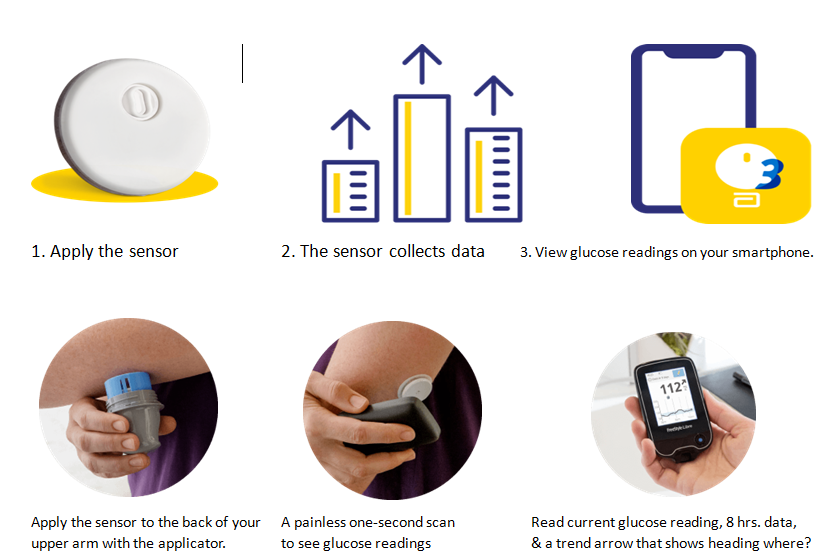
Device CGM sensors are small, unobtrusive, and easily applied to the back of the upper arm. The sensor continuously measures and stores glucose readings when worn on your body, and sensors come with an applicator and use a small, flexible tip that is inserted just under the skin.
With CGM, you can get real-time glucose readings and feedback on glucose levels and trends to make informed diabetes management decisions. Helps in uncovering glucose patterns for a complete picture blood glucose trend, thus help reduce time spent in hypoglycemia, improve overall glucose control, and most importantly know how different activities affect our glucose levels. Optional, real-time glucose alarms get real-time glucose alarms that notify you the minute your glucose is too low or too high. Unsurpassed 14-day accuracy for adults and children [6, 7, 8, 10].
Statistically significant HbA1c reduction based on the confidence interval range was observed at 2-4 months and sustained at month 12 in adults and children with T1D and adults with T2D. In India Continuous Glucose Monitoring (CGM) are manufactured by Abbott Diabetes Care Inc., Dexcom Inc., Medtronic PLC., Eversense., and Ascensia. While an initial cost around 11,000. 00, a Personal sensor for 14 Days costs Rs 2399/box. The FreeStyle Libre 3 system has many improvements compared to the Freestyle Libre 2 and 14-day systems. The sensors are smaller, easier to attach, and they track glucose readings much better, and devices are more convenient to use and to cost the same [5] (Figure 1).
A randomized clinical trial conducted at 15 centers in the US (July 30, 2018, to October 30, 2019; follow-up completed July 7, 2020) among 175 randomized participants (mean age, 57 [ SD-9] years; 88 women [50%]; 92 racial/ ethnic minority individuals [53%]; mean [SD] baseline HbA1c level, 9.1% [0.9%]), 165 (94%) completed the trial. Mean HbA1c level decreased from 9.1% at baseline to 8.0% at 8 months in the CGM group and from 9.0% to 8.4% in the BGM group (adjusted difference, -0.4%. In the CGM group, compared with the BGM group, the mean percentage of CGM- measured time in the target glucose range of 70 to 180 mg/ dL was 59% vs 43% (adjusted difference, 15% P < .001), the mean percentage of time at greater than 250 mg/dL was 11% vs 27% (adjusted difference, -16% P < .001), and the means of the mean glucose values were 179 mg/dL vs 206
mg/dL (adjusted difference, -26 mg/dL P < .001). Severe hypoglycemic events occurred in 1 participant (1%) in the CGM group and in 1 (2%) in the BGM group [14].
Type 2 diabetes reversal has been viewed in the literature primarily as a dichotomous event, despite not being optimal for clinicians or patients. A cohort study with objectives of defining stages of type 2 diabetes reversal and measure changes in reversal stages before and after 90 days of digital twin-enabled precision nutrition therapy, compared pre/ post changes of HbA1c, weight, BMI, and nutrition therapy. The results of 463 patients at baseline, the proportions of patients in each reversal stage were Stages 1 and 2: 0%, Stage 3: 1%, Stage 4: 8%, Stage 5: 6%, and Stage 6: 85%. After 90 days, the proportions in each reversal stage were Stage 1: 2%, Stage 2: 9%, Stage 3: 32%, Stage 4: 39%, Stage 5: 7%, and Stage 6: 11%, indicating significant progress. Reversal stage progression rates varied by patient subgroup.
{Reversal stages were defined as Stage 0: HbA1c < 5.7% without medication for > 1 year, Stage 1: HbA1c < 5.7% without medication for < 1 year, Stage 2: HbA1c < 6.5% without medication, Stage 3: estimated HbA1c (eA1c) between 5.7 and 6.4% without medication, Stage 4: estimated HbA1c (eA1c) between 5.7 and 6.4% with metformin monotherapy, Stage 5: dual oral therapy, Stage 6: > = 3 medications}. Though the use of CGMs helped reversal stages during therapy, all did not benefit to same level during
90 days of precision nutrition therapy.
Limitations
i) Among adults with poorly controlled type 2 diabetes treated with basal insulin without prandial insulin, continuous glucose monitoring, as compared with blood glucose meter monitoring, resulted in significantly lower HbA1c levels at 8 months but its use in T2D treated with basal insulin without prandial insulin or oral antidiabetics has not been well studied [7]. ii) For patients who become overwhelmed, the psychological burden of the CGM may be too high in relation to its likely benefits. ii) In view of the cost most Indian diabetics will not be able to afford CGM devices [6, 8].
BS Test through Laboratories
Blood sugar test prices in the laboratories range from Rs 50 to Rs 150 in the laboratories and while using a home test kit can cost as low as Rs 20. The HbA1C- Glycated Hemoglobin test Price in India is around ₹600. Currently this is the most reliable monitoring tool in developing countries to complement the home tests when we monitor using standard glucometers.
Expenditures of managing Diabetes in India: The average total expenditure per patient per month (pppm) is around ₹1,500 to 5000, based the medication prescribed, 80% expenditure on medicines and remaining 20% on nonmedical expenditure. Adding CGM will increase the cost to about INR 5000 per month.
Eat healthily
There’s no one-size-fits-all diabetes diet, so the family physician or the primary care doctor must tailor-make the diet plan for each patient in consultation with the family about normal family pot, resources to change, if need be, common food items available in the community /eaten food taboos if any. Beginning with reducing processed foods and high sugar foods and carbohydrates, slowly expanding to increase protein and fats for deriving requisite calories. Increasing the quantity of vegetables and fruits to make the tummy full is a better approach [14]. A dietician’s service may not be available in most primary and secondary care facilities and the physicians must take over this role. Dedicated diabetes care facilities and tertiary care institutes may have the services of dieticians and they can use it. In my experience majority of nutrition graduates need applied diet planning training- particularly for using the locally available raw items and adaptation of local cooking practices and be equipped for advocating and demonstrating changes only if needed. Try to make up your daily calories requirements- 40% from carbohydrates, 30% from fat and 30% from protein with emphasis on vegetables and fruits to make the volume (bulk) to make the tummy full every time. A big No! No! to processed foods and foods high in sugar. This “magical” mix promises to lower risks for diabetes and heart disease, and cancer. Fruits, Vegetables, and Intermittent fasting [9, 10, 14].
Fruit and Diabetes Scientific Studies
The recent scientific research on fruit intake and diabetes shows that eliminating fruit from your diet increases your risk of developing type 2 diabetes or risks of complications of diabetes. Eliminating fruit intake is associated with worse health outcomes for people with diabetes. However, with the rise in popularity of low-carbohydrate and ketogenic diets, many individuals have minimized or even eliminated their fruit intake out of fear that fruits will increase their overall blood glucose levels.
One study involving 3,300 women in China found that high fruit consumption during pregnancy was associated with lower blood glucose levels, even among women who ate high glycemic fruits. Pregnant women who ate no fruit or only a minimal amount of fruit during pregnancy were most likely to be diagnosed with gestational diabetes.
A randomized, controlled, crossover study involving healthy female volunteers measured blood glucose levels after consuming a meal of 50 grams of starch in the form of wheat bread or rye bread, as well as the same amount of bread in addition to pureed berries. Interestingly, blood glucose levels were lower after eating bread with pureed berries than after eating the bread alone.
A large epidemiological study in Chinese adults, higher fresh fruit consumption was associated with significantly lower risk of diabetes and, among diabetic individuals, lower risks of death and development of major vascular complications. The nationwide China Kadoorie Biobank study had recruited 0.5 million adults aged 30–79 (mean 51 yrs.) from ten diverse localities across China between June 2004 and July 2008. During ~7 y of follow-up, 9,504 new diabetes cases were recorded among 482,591 participants without prevalent (previously diagnosed or screen- detected) diabetes at baseline, with an overall incidence rate of 2.8 per 1,000 person-years. Among 30,300 (5.9%) participants who had diabetes at baseline, 3,389 deaths occurred (overall mortality rate 16.5 per 1,000), along with 9,746 cases of macrovascular disease and 1,345 cases of microvascular disease [5]. Overall, 18.8% of participants reported consuming fresh fruit daily, and 6.4% never/rarely (non-consumers), with the proportion of non-consumers about three times higher in individuals with previously diagnosed diabetes (18.9%) than in those with screen- detected diabetes (6.7%) or no diabetes (6.0%). Among those without diabetes at baseline, higher fruit consumption was associated with significantly lower risk of developing diabetes (adjusted HR = 0.88 for daily versus non-consumers, p < 0.001, corresponding to a 0.2% difference in 5-y absolute risk), with a clear dose–response relationship. Among those with baseline diabetes, higher fruit consumption was associated with lower risks of all-cause mortality (adjusted HR = 0.83 per 100 g/d) and microvascular (0.72) and macrovascular (0.87) complications (p < 0.001), with similar HRs in individuals with previously diagnosed and screen- detected diabetes estimated differences in 5-yrs. absolute risk between daily and non-consumers were 1.9%, 1.1%, and 5.4%, respectively [9].
Many studies have inferred that ample fruits and vegetables, whole-grains, and high-fiber foods without excess fat or calories, in conjunction with regular physical activity can improve control of blood sugar among individuals with T2D and may offer some against its development [11]. Studies have shown that raspberries, strawberries, blueberries, and blackberries benefit blood sugar management by enhancing insulin sensitivity and improving glucose clearance from the blood. The American Diabetes Association explains how water and fiber in foods increase volume and thereby reduce energy density. In their natural state, fruits and vegetables have high water and fiber content and are low in calories and energy density. Fat increases the energy density of foods, while water and fiber decrease energy density.
Quit smoking
Quitting smoking improves our body’s usage of insulin. We have known for a long time that people who smoke cigarettes are 30%–40% more likely to develop type 2 diabetes than people who don’t smoke. Nicotine increases blood sugar levels and makes them harder to handle. People with diabetes who smoke are more likely than those who don’t smoke to have trouble with insulin dosing and managing their condition as often they need larger doses of insulin to keep their blood sugar close to their target levels. Research in 2022 revealed that quitting smoking helped in a transitory decrease in type 2 diabetes mellitus patient’s glycemic levels that can continue up to three years [15].
As it makes the patient hungrier the next day, reduces satiety after eating, leading to more eating and a rise in blood sugar [16]. The physiological state at the end of a meal when further eating is inhibited by ‘fullness’ is termed satiety. Satiety, or between-meal satiety, ends as meal processing and absorptive signals wane and hunger initiates the next period of eating [14].
Get enough sleep & address obstructive sleep apnea (OSA)
Sleeping less than 7 hours per night regularly increases insulin resistance.
We all experience the stress of the day’s work and other responsibilities as the reasons for poor sleep. Stress alone doesn’t cause diabetes. But there is some evidence that there may be a link between stress and the risk of type 2 diabetes. Researchers think that high levels of stress hormones might stop insulin-producing cells in the pancreas from working properly and reduce the amount of insulin they make. Diabetics sleeping Less than 7 hours for long find it harder to manage diabetes [17]. Several cross-sectional studies have shown that OSA impairs insulin sensitivity and glucose tolerance, and it has been demonstrated that OSA is independently related to the development of insulin resistance, while the oxygen desaturation index is the main determining factor. OSA has been shown to increase the risk and severity of type 2 diabetes independent of age and obesity. Intermittent hypoxia’s effect on adipose tissue induces insulin resistance. There are limited data on the relationship of OSA to type 1 diabetes and the cardiometabolic impact of OSA in children [18].
Conclusion
The prevalence of diabetes is increasing among all age groups in India, which can be attributed to the increasing obese population, along with rapid urbanization, sedentary lifestyles, unhealthy diets, tobacco use, increasing life expectancy, and physical inactivity.
Making positive lifestyle changes like eating a well- balanced diet, exercising regularly, and getting down to a healthy weight and maintaining it are the key to possibly reversing or managing diabetes. Other lifestyle changes like not smoking, getting enough sleep, limiting alcohol, and managing stress also contribute to the cause [19].
Monitoring Blood sugar to adjust the quantity and quality of each meal plays an important role and that can be done effectively with routine glucometers at much less cost. In India, close to 25% of Type 1 diabetes patients use CGM devices, and it is expected to grow close to 50% of T1D patients using CGM devices, during the next 3 years. However, very few T2D people use CGMs.
Some physicians are trying to promote CGMs. However, it is unlikely to grow much due to forbidding cost and creating panic among some psychologically susceptible people affecting day today life increasing the anxiety or depression. The rising prevalence of diabetes and obesity, growing awareness regarding diabetic care, concern over healthcare expenditure, and technological advancements are a few factors that will further influence the market.
References
-
(2023) Diabetes, Key facts. World Health Organisation.
-
(2022) Future Surge in Diabetes Could Dramatically Impact People Under 20 in U.S. CDC.
-
(2023) 80% of diabetics can reverse their disease- here’s-how. Boston.
-
Noyce E (2023) Diabetes breakthrough brings world closer to life without insulin. Switzerland.
-
(2023) Is it possible to reverse diabetes?
-
(2023) Can Type 2 Diabetes Be Reversed?
-
What are Continuous Glucose Monitors.
-
Martens T, Beck RW, Bailey R, Ruedy KJ, Calhoun P, et al. (2021) Effect of Continuous Glucose Monitoring on Glycemic Control in Patients with T2D: A Randomized Clinical Trial, JAMA 325(22): 1-11.
-
Sievenpiper JL, De Souza RJ, Jenkins DJA (2012) Sugar: fruit fructose is still healthy. Nature 482(7386): 470.
-
(2023) 10 Best Glucometers in India- an ultimate guide. Beauty and Health.
-
(2022) India-continuous-glucose-monitoring, pp: 70.
-
Amin T, Mercer JG (2016) Hunger and Satiety Mechanisms and Their Potential Exploitation in the Regulation of Food Intake. Curr Obes Rep 5(1): 106-112.
-
Wang M, Gong WW, Hu RY, Pan J, Lv J, et al. (2019) Associations between stressful life events and diabetes: Findings from the China Kadoorie Biobank study of 500,000 adults. J Diabetes Investig 10(5): 1215-1222.
-
Mohammad A (2011) The Role of Fruits and Vegetables in Diabete 1(1): 27-35.
-
Ryan DH, Yockey SR (2017) Weight Loss and Improvement in Comorbidity: Differences at 5%, 10%, 15%, and Over. Curr Obes Rep 6(2): 187-194.
-
Park SH (2015) Effects of passive static stretching on blood glucose levels in patients with type 2 diabetes mellitus. J Phys Ther Sci 27(5): 1463-1465.
-
Can quitting smoking reverse diabetes?
-
Sleep for a Good Cause. CDC.
-
Almendros I, Garcia RF (2017) Sleep apnoea, insulin resistance and diabetes: the first step is in the fat. Eur Respir J 49: 1700179.
- Psychogenic Erectile Dysfunction in Late Adulthood: A Case Report on Clinical Intervention and Intimacy Restoration
- Clinical Trials on COVID-19 in 2025: A New Chapter in Global Health Research
- Innovations and Challenges in Contemporary Medical Clinical Trials: An Editorial Perspective
- Innovations and Challenges in Contemporary Medical Clinical Trials: A Critical Perspective
- Reimagining Clinical Trials: The Power of Continuous Feedback from Medical Reports
- Factors Influencing Brain Drain: Perspectives from a Medical School in Turkey